Growing with nature
Diverse habitat within crops and field margins
Weeds
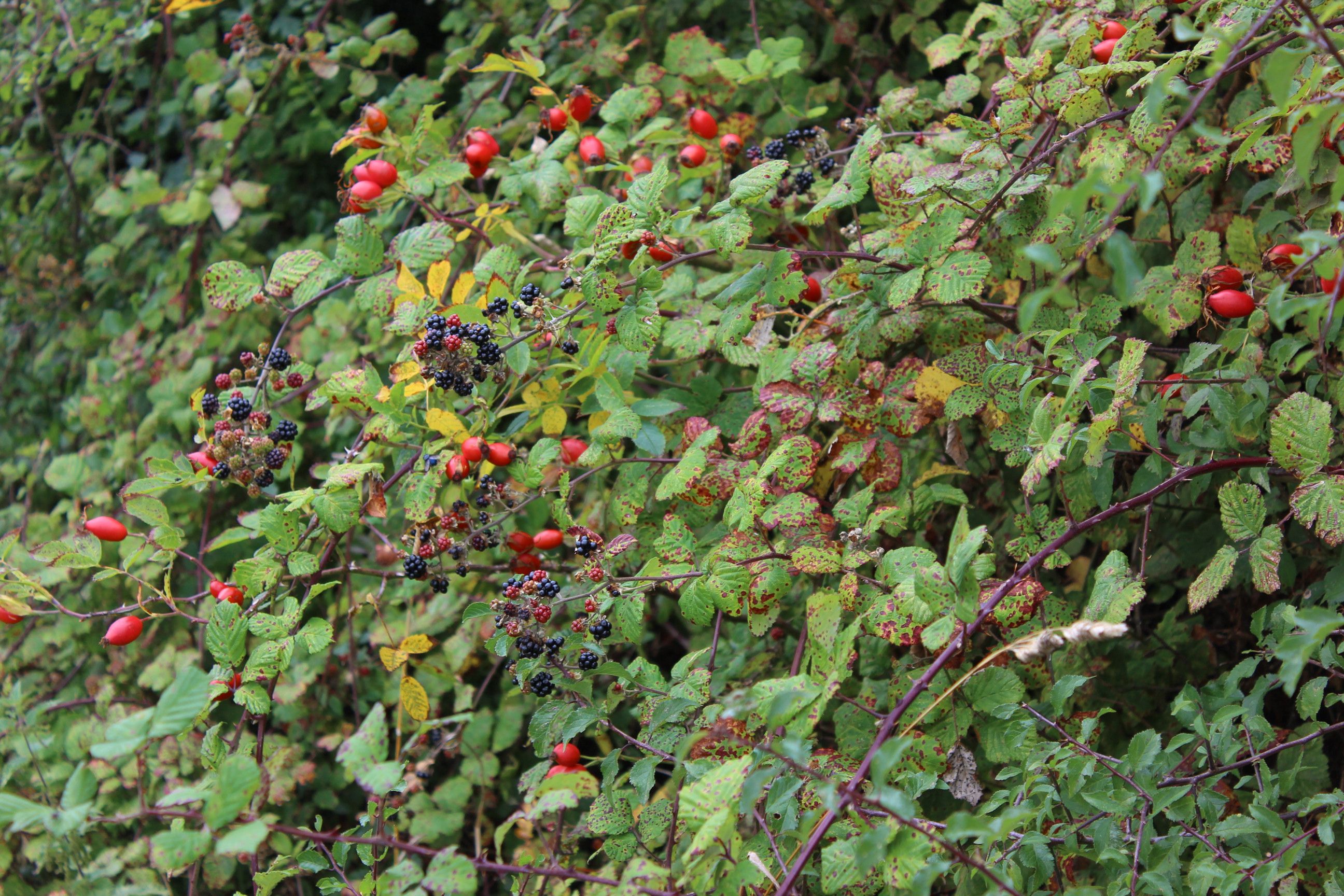
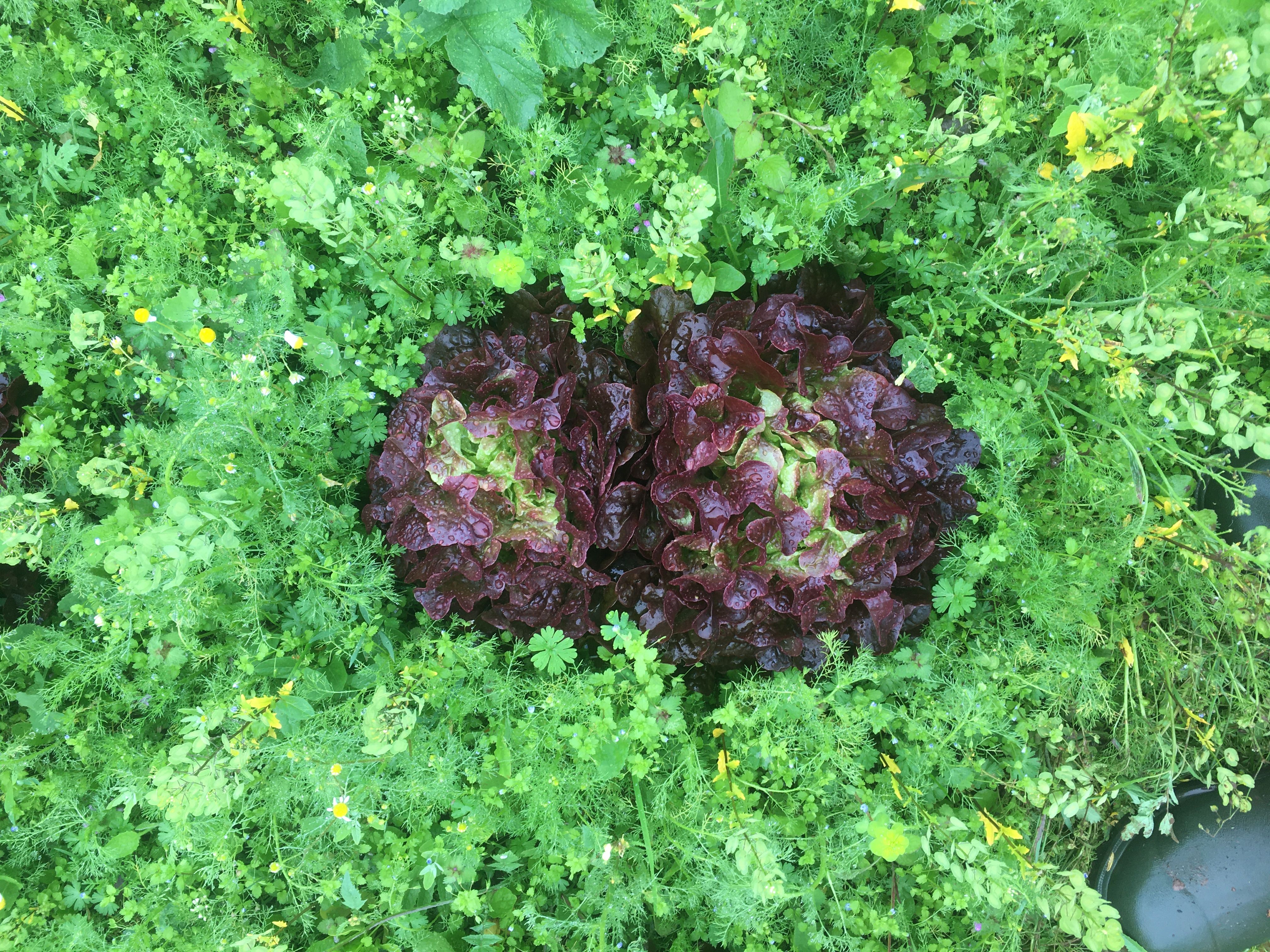
As well as being really keen on growing vegetables, we LOVE weeds. When we first came to Stowey Rocks Farm, we didn't appreciate weeds, however, we were lucky to inherit a fabulous weed burden on our land which over the years, along with a local botanist, has educated us.
At first we battled, and despite tractor mounted weeding implements, hand hoes and weeding by hand, the weeds triumphed as they should. The size of our Fat Hen was particularly impressive, and years later, as we became more enlightened, we realised that this is the native annual, along with our notorious Red Shank, that provides an abundant natural source of winter bird seed for our increasingly large flocks of finches. No need to sow bird seed mixes in field margins in organic veg, just look after your soil, get a crop established, then let the weeds do their thing and enjoy beautiful finch murmuration's flowing from field to hedge all through the winter, whilst harvesting your cabbages.
Whenever we can, we let weeds (native annuals and perennials) flower and set seed. They protect soil from weather, hold onto nutrients, support mycorrhizal fungi and soil biodiversity which in turn supports our vegetable production. Above ground, weeds support insect life, birds, Roe Deer, rabbits.....bats, Little Owls, Buzzards, Kestrels, Ravens, Badgers.......
Wild field margins
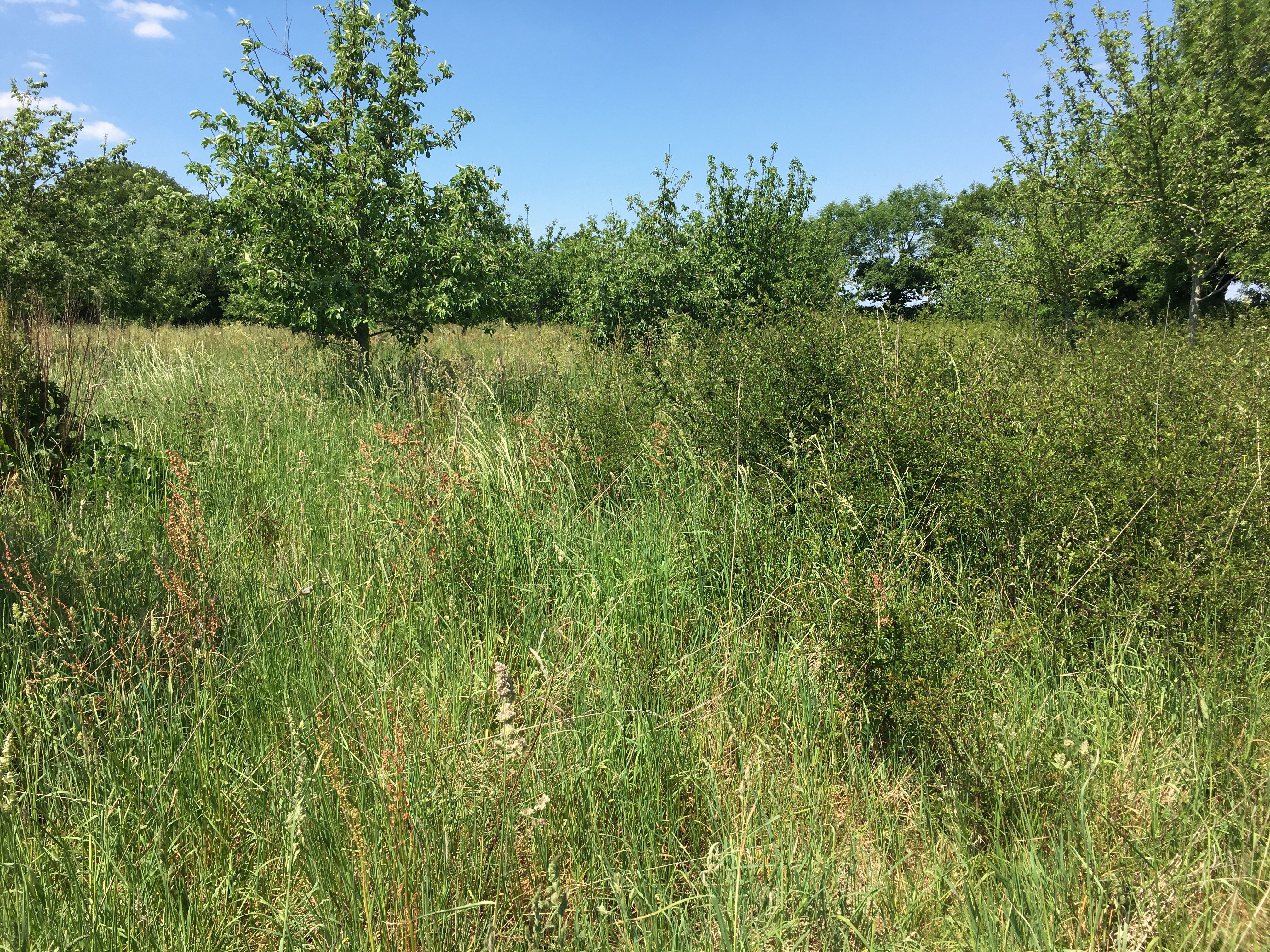
Our field margins are left uncultivated and only cut every 2 or 3 years in rotation so that there is always some tall grassy vegetation for ground nesting birds and field voles. Corners and less productive areas around fields are left to scrub up with blackthorn and bramble, providing favoured nesting habitat for Long-Tailed Tits and an important nectar source for our native bumble bees.
At the end of a dry summer, we can find harvest mice breeding nests in our orchards; their beautiful balls of woven grass, suspended in the air on Cocksfoot stem stilts, held up by Blackthorn growing out from our hedges. We believe the harvest mice are attracted by the natural cover from unkempt alleyways between trees, and the abundant food source of windfall apples.
Natural biological control
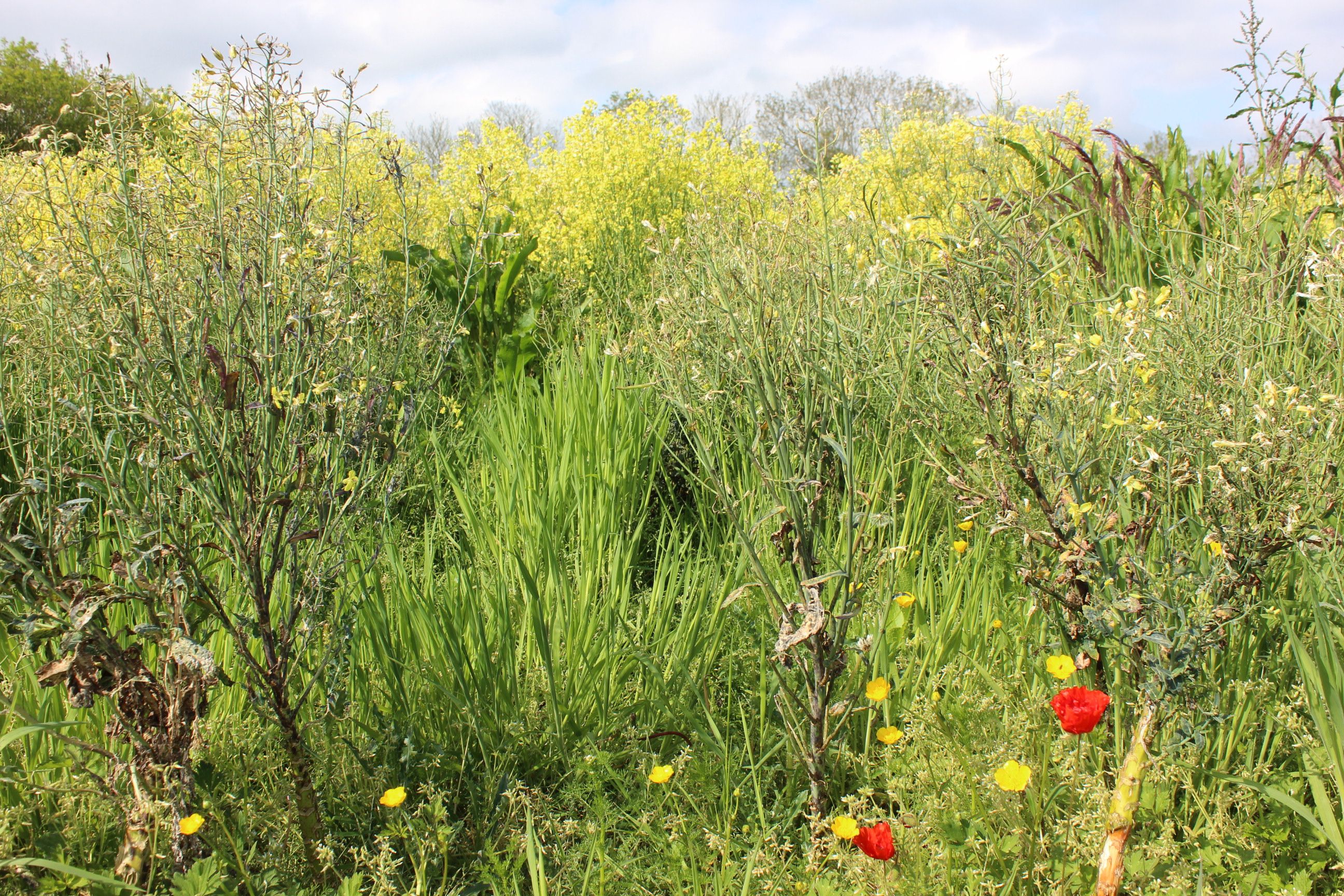
Each summer, the clouds of cabbage white butterflies that threaten to consume our brassica crops, are themselves eaten by natural predators; the parasitic wasps do well because we leave consecutive crops of brassicas to flower, allowing them to complete their life cycle. We are always happy to find mummified caterpillars attached to the outer leaves of our cabbage and broccoli plants.
Organic farming enables natural biological control systems to become established whether it is carabid beetles eating slug eggs or soil inhabiting fungi parasitising plant parasitic nematodes or shiny incandescent beetles devouring dock leaves, it's wonderful to observe these natural systems proliferating.
Conservation grazing
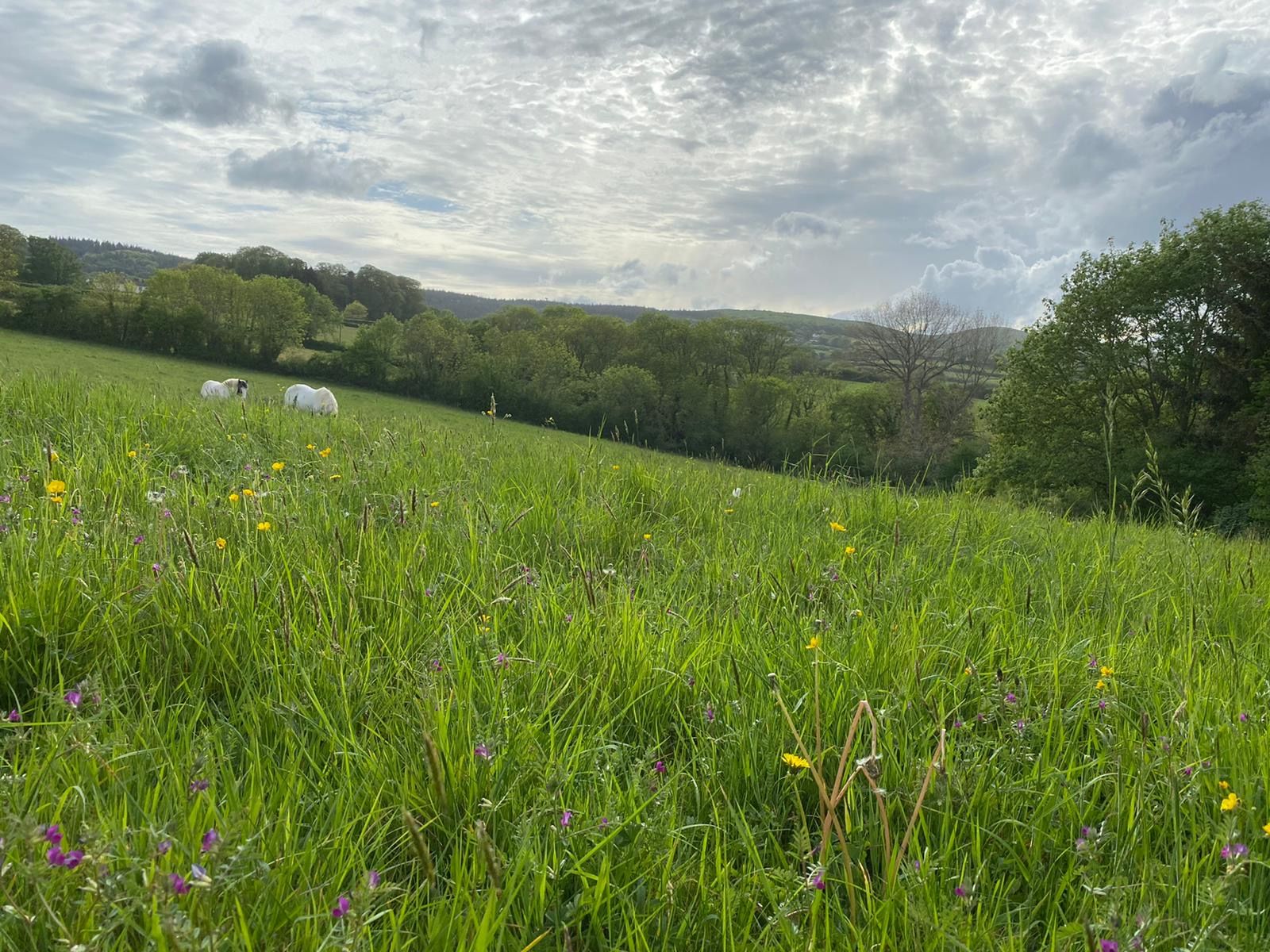
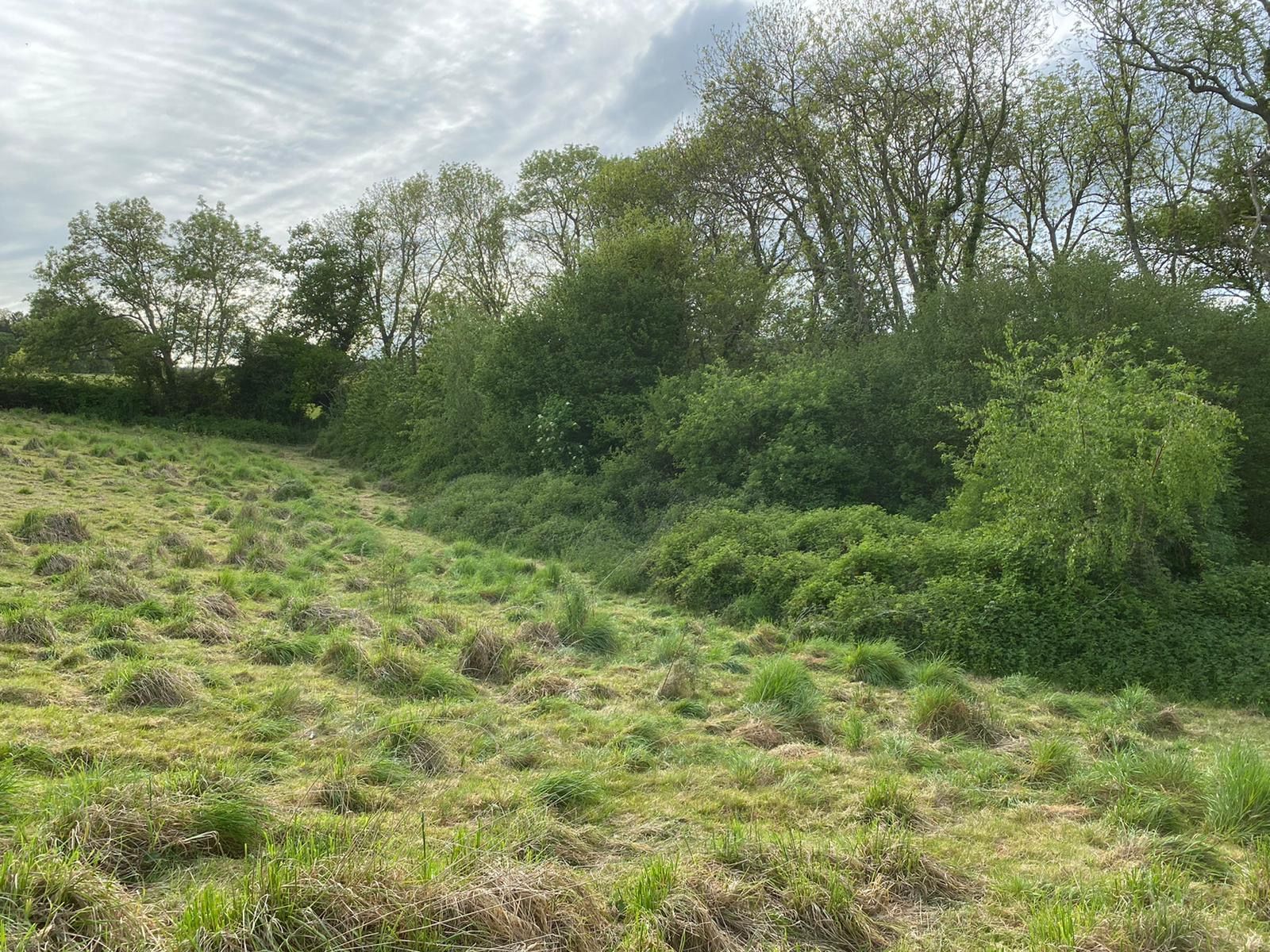
Our steeper slopes unsuited to horticulture remain permanent pasture and are rotationally grazed by two ponies. These pastures are unimproved and diverse, with lots of flowering plants and patches of tussocky grasses. The ponies maintain the grassland and over time will help to increase plant diversity.
Barn Owls and Tawny Owls can be seen hunting over our fields at dusk. The ponies have made it easier for the hunters to spot their prey by creating a mosaic of habitat; breaking up the areas of tall tussocky grass with more tightly grazed areas.
Trees such as Oak, Cherry, Ash, Alder, Hazel and Hawthorn naturally regenerate from our hedges into the fields; wind and bird sown or planted by squirrels and Jays. The ponies are doing a great job of controlling the dominant grasses, providing light and space for more delicate plants, browsing on brambles and bracken and generally leaving tree saplings to grow. The patiently waiting dormant seeds of some native annuals also get opportunities to germinate; moments of exuberant play create patches of bare soil when the ponies kick up the turf with their hooves.
© 2026 - Plowright Organic
Powered by
